About us

HindenburgResearch &Development

We are an education organisation in Europe: teachers, historians, education scientists, writers and developers. We run an online learning platform for schools and families, design simulations, write books and coursebooks, research how people learn and hold competitions – and BRINK, our simulation of the two World Wars, is one of many things we do.

Emblem of Hindenburg Research & Development

Team

The people who lead our work:

  • Leopold Dahn

    Head of Educational Research, Headquarters

  • Buğra Erdik

    Member of the Executive Board, Headquarters

  • Burak Kıyak

    Regional Director, Middle East

  • Bertha Meyer

    Head of the Education Unit

Principles

Education will change quickly in the years to come. What we build is meant for that future – and carries a responsibility for the accuracy of what we show and the attitude behind it.

Teachers and students will remain

We know that education is about to change fast. But there will always be teachers and students. What they do together will rest on the skills of the 21st century, and simulation – deciding, negotiating and living with the consequences – will be the most important tool of all.
From the classroom

Our projects grow out of everyday school life and are tried first at our own school before we offer them to others.

Real history, real stakes

Every game begins with real history. We invent characters only where we do not want to attribute guilt to a real person. Simulation is not re-enactment: our games ask about decisions and their consequences, and they celebrate neither war nor perpetrators.

In English and German

Our platform and our games are played in English or German. Students who negotiate, debate and persuade learn the language by needing it.

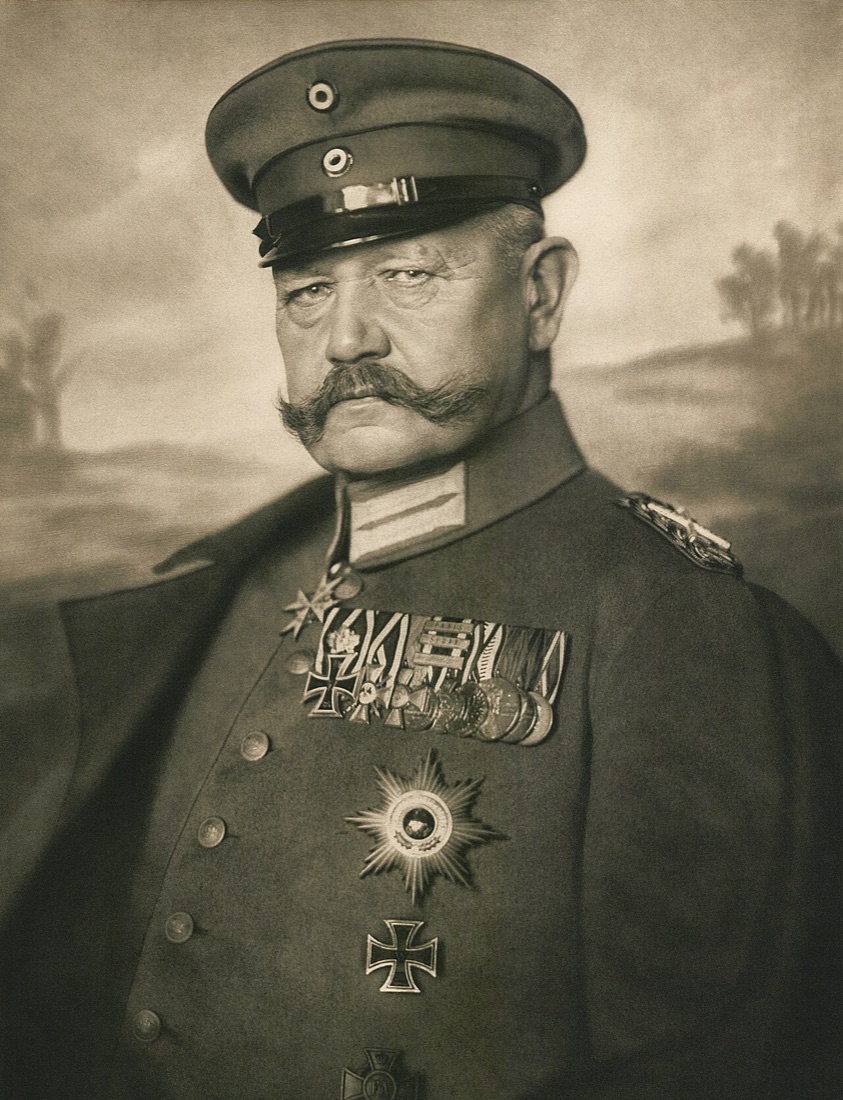
Paul von Hindenburg, portrait of 1914
Paul von Hindenburg, 1914. Photograph by Nicola Perscheid. Staatsbibliothek zu Berlin – Preußischer Kulturbesitz. Public domain.

On our name

Why Hindenburg

We did not choose Paul von Hindenburg (1847–1934) as a question. In the First World War he was one of the most inspiring figures of his age: the victor of Tannenberg, to whom a whole nation looked through four years of war. That is why we chose his name, and we hold him in great respect.

And yet the same man, at the end of his life, opened the way to a dictatorship. That someone who could inspire so many could do so is one of the most remarkable things in history – and one our students think about long after the game.

  1. 1847

    Born on 2 October in Posen.

  2. 1914

    Turned into a national hero after the Battle of Tannenberg in August.

  3. 1916

    Chief of the General Staff of the Field Army; heads the Third Supreme Army Command together with Erich Ludendorff.

  4. 1919

    Spreads the stab-in-the-back myth before the National Assembly’s committee of inquiry.

  5. 1925

    Elected Reich President; re-elected in 1932.

  6. 1933

    Appoints a new Reich Chancellor on 30 January, and the dictatorship begins.

  7. 1934

    Dies on 2 August at Neudeck.